
European E-commerce: Markets, Benchmarks & Growth Strategies

Topic
Digital Marketing, Ecommerce, Thoughts
Written by
Date
The European E-commerce Market Today
European e-commerce represents one of the most significant growth opportunities for modern businesses. Online shopping continues to expand, consumers are becoming increasingly comfortable with digital transactions, and entering new countries can create substantial opportunities for ecommerce brands.
However, there is one important detail: Europe is not a single, unified e-commerce market.
Consumer behaviour, purchasing power, competition, payment preferences and customer acquisition costs vary significantly from one country to another. A strategy that performs well in the UK may deliver entirely different results in Germany or the Netherlands.
For an e-shop looking to expand internationally, success is not simply a matter of translating the website and increasing the advertising budget. It requires a thorough understanding of the market, the right local adaptations and a sustainable business model.
According to the European E-commerce Report 2026, published by Ecommerce Europe and EuroCommerce, total B2C e-commerce turnover in Europe reached €911 billion in 2025, representing a 7% increase compared to the previous year. After adjusting for inflation, real growth stood at 4%.
The report covers 38 European countries. Within the European Union, B2C e-commerce turnover reached €715.8 billion in 2025, also recording annual growth of 7%.
For 2026, total European e-commerce turnover is forecast to reach €961 billion.
Western Europe remains the largest region, accounting for 57% of total European turnover, with a value of €523.1 billion and growth of 5%. Northern Europe reached €69.5 billion (+6%), while Central Europe recorded €92.9 billion (+8%).
Even higher growth rates were recorded in Southern and Eastern Europe, at 11% and 14%, respectively.
However, this does not necessarily mean that the fastest-growing market is the best choice for every business. A mature market may offer greater purchasing power and higher online shopping penetration, while an emerging market may present different opportunities but require greater investment in demand generation.
How Many Europeans Shop Online?
According to the European E-commerce Report 2026, 75% of Europeans aged 16–74 purchased goods or services online in 2025, compared to 68% in 2021.
At European Union level, Eurostat reports that 78% of internet users made online purchases in 2025, compared to 62% in 2015.
These two figures should not be confused, as they come from different sources and are based on different geographical coverage and statistical populations.
For businesses considering international expansion, the challenge in many European markets is no longer simply convincing consumers to shop online. It is giving them a reason to choose their e-shop over a competitor.
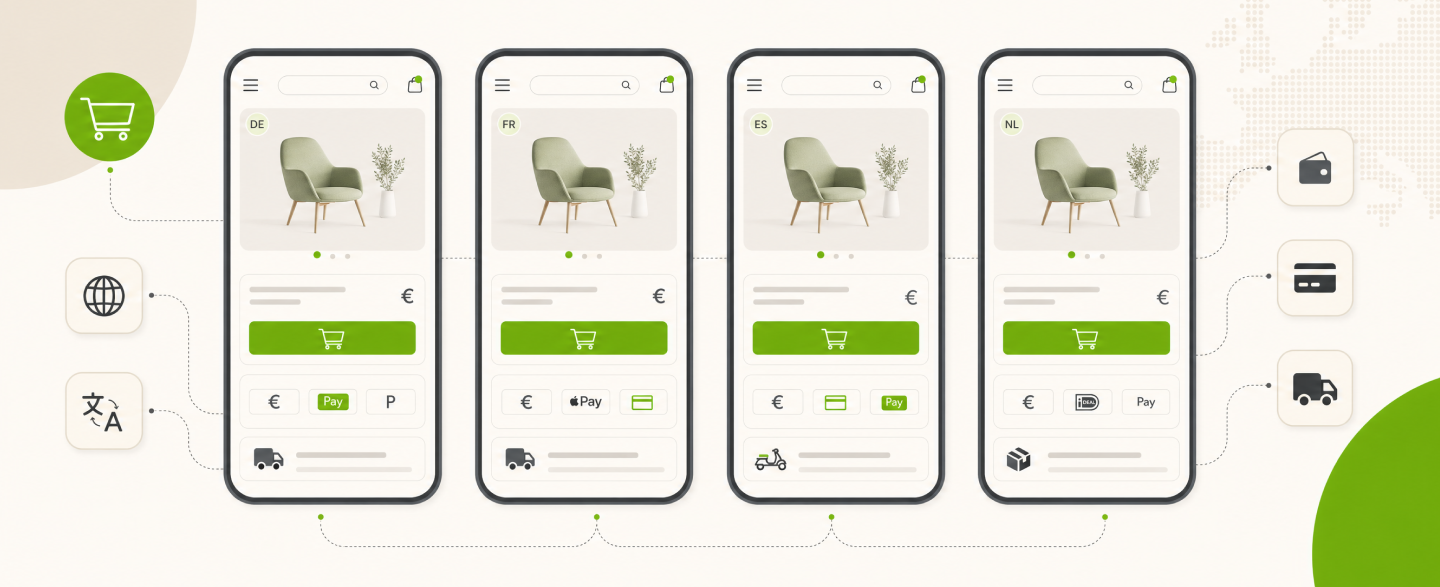
The Most Important E-commerce Markets in Europe
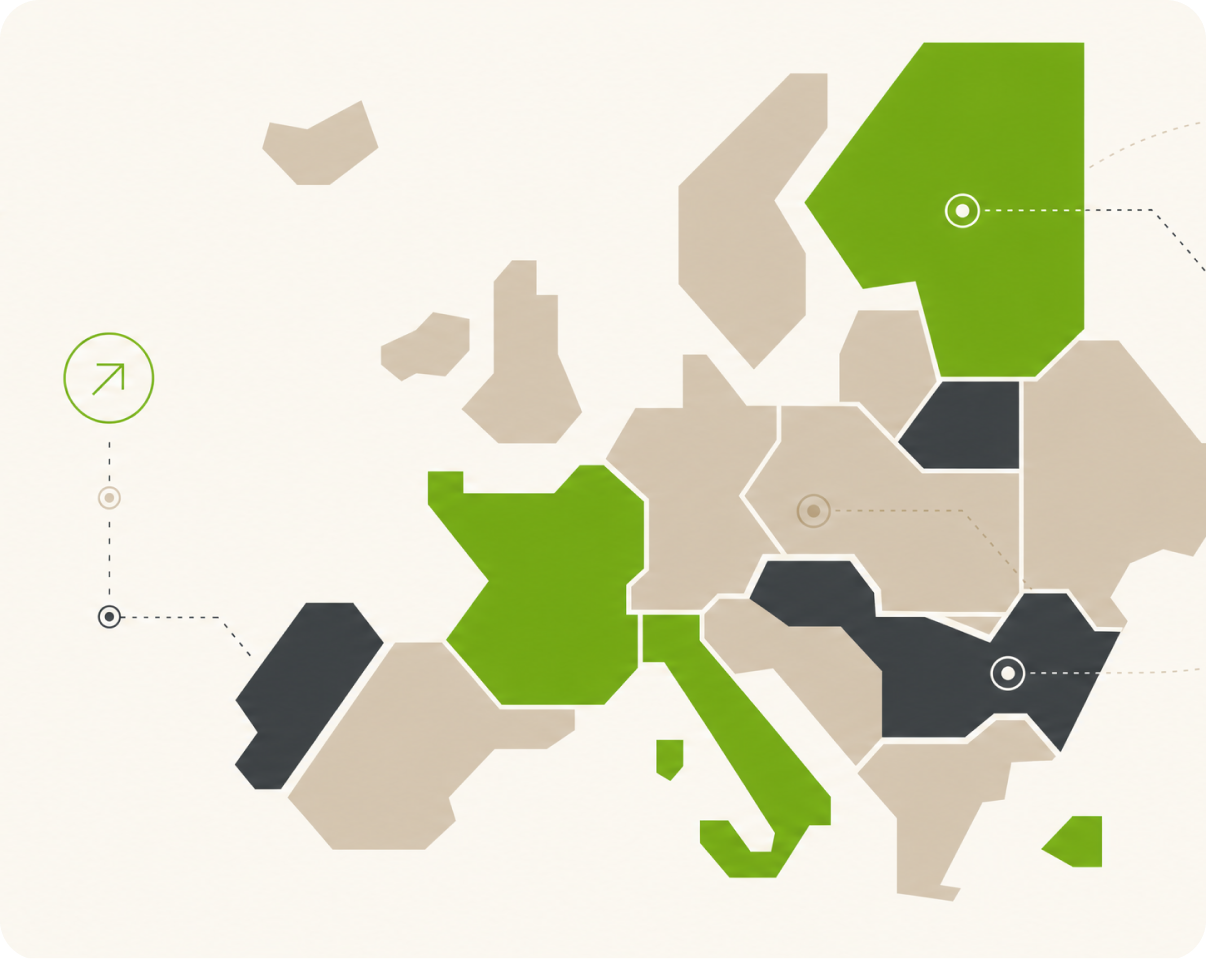
Choosing the right country is one of the most important decisions for a business looking to expand internationally. A large market may offer access to more potential customers, but it usually attracts stronger competition as well.
United Kingdom (UK)
The United Kingdom is one of the most mature e-commerce markets in Europe. According to the Office for National Statistics (ONS), online sales accounted for 27.5% of total retail sales in 2025.
Fashion, beauty, homeware and consumer electronics have a strong presence in the online market. However, competition is intense, particularly for brands entering the market without an established level of brand awareness.
Localised communication, competitive pricing and clear shipping and returns policies are important factors for a successful market entry.
Scotland can be considered as part of a broader UK expansion strategy. It is not a separate national e-commerce market, although regional differences in demand and logistics can influence planning.
Ireland
Ireland is an interesting option for international ecommerce brands, particularly businesses looking to enter an English-speaking market within the European Union. According to Eurostat, 95% of internet users in Ireland made online purchases in 2025.
At the same time, the Central Statistics Office (CSO) reported that 37.5% of businesses made e-commerce sales in 2025. This figure refers to businesses, not consumers, and includes sales through websites, apps and electronic data interchange.
The country offers an English-speaking environment, high familiarity with online shopping and access to the EU Single Market. Nevertheless, it should not simply be treated as an extension of the UK. Ireland has its own tax framework, consumer behaviour and logistics requirements.
Netherlands
The Netherlands is one of the most digitally mature e-commerce markets in Europe. According to Eurostat, 94% of internet users in the country made online purchases in 2025.
Data from the Thuiswinkel Markt Monitor for the first half of 2026 recorded more than 170 million online purchases, representing a 3% increase compared to the same period in 2025. Total online spending reached €17.1 billion, while the average transaction value stood at approximately €100.
Purchases from foreign online stores accounted for 14% of the total, highlighting Dutch consumers’ familiarity with cross-border shopping.
Local adaptation remains important. Payment preferences, delivery options, communication and the checkout experience should reflect local expectations.
iDEAL, one of the Netherlands’ most important online payment methods, is gradually transitioning towards Wero during 2026. Brands entering the market should monitor these developments and ensure that their available payment options meet consumer expectations.
Germany
Germany is one of the largest e-commerce markets in Europe, offering significant opportunities across fashion, beauty, consumer electronics and homeware.
At the same time, it is a competitive market with strong local retailers and high consumer expectations. Product descriptions, purchasing information, customer support and advertising messages should all be adapted to the local market. Simply translating a website is rarely enough to build the trust required to convert customers.
France
France is also a major European e-commerce market, offering opportunities across fashion, beauty, personal care, homeware and lifestyle.
Language, local communication, consumer expectations and product positioning should all be part of the market entry strategy. Businesses need to assess both market demand and the cost of serving that market before investing in advertising.
E-commerce Benchmarks: What Should a Business Measure?
E-commerce benchmarks help businesses understand their performance and identify opportunities for improvement. However, there is no single Conversion Rate or ROAS that applies to every European e-shop.
The key metrics worth monitoring include:
● Average Order Value (AOV): The average value of an order.
● Conversion Rate (CVR): The percentage of visitors who complete a purchase.
● Customer Acquisition Cost (CAC): The cost of acquiring a new customer.
● Return on Ad Spend (ROAS): The revenue attributed to advertising investment.
● Customer Lifetime Value (LTV): The total value a customer generates over time.
● Repeat Purchase Rate: The percentage of customers who make repeat purchases.
A high ROAS does not necessarily translate into high profitability. An e-shop with a 60% gross profit margin has different advertising investment capabilities from one operating with a 25% margin.
That is why break-even ROAS should be calculated based on actual profit margins and other variable costs. Shipping, payment processing fees, returns and operating expenses can all have a significant impact on the final result.
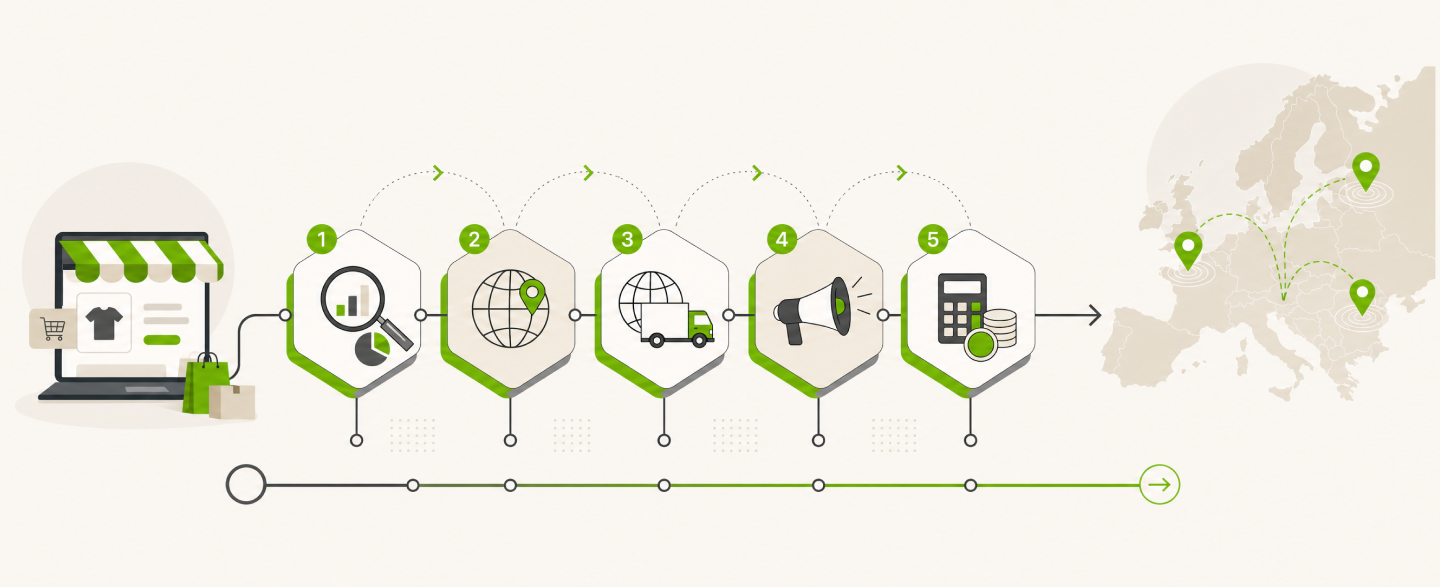
How Does Performance Marketing Work Across European Markets?
Advertising strategies need to adapt to consumer behaviour, competition and the level of demand in each country.
A comprehensive strategy needs to combine demand capture, demand generation and customer retention. Acquiring new customers is important, but retaining existing ones and increasing their purchasing value are equally important for long-term profitability.
To explore the developments shaping the next stage of digital commerce, read our article on E-commerce Trends 2027: What You Need to Know.
Data, Analytics and AI in Modern E-commerce
The growth of an ecommerce store requires reliable data and the effective use of technology. Tools such as GA4 and Google Tag Manager, combined with Conversion APIs and server-side tracking, help improve data collection and performance analysis. At the same time, the rise of AI is transforming how consumers search for and discover products. As a result, a business’s organic visibility is no longer limited to traditional SEO but increasingly extends to AEO and GEO strategies, aimed at improving visibility across answer engines and AI-powered search environments.
How Can an E-shop Expand into a New European Market?
Entering a new country is a business decision, not simply a marketing activity.
Before investing in advertising, a business needs to evaluate market size and potential, competition, demand for its products, pricing and consumer expectations. It then needs to adapt the shopping experience accordingly. This includes language, product descriptions, currency, payment methods, shipping, returns and customer support.
Building a Realistic Market Entry Budget
Advertising budgets should not be determined independently of the total cost of acquiring and serving customers. A realistic estimate needs to account for advertising investment, marketing costs, localisation, shipping, payment processing fees, returns, customer support and technology infrastructure.
It is also important to allocate a budget for testing. The first few weeks can provide valuable insights, but they are not always enough to assess the long-term profitability of a new market.
How Geeko Digital Helps Ecommerce Brands Grow
At Geeko Digital, we combine performance marketing, data infrastructure, ecommerce consulting, and technology to build comprehensive growth strategies. We support businesses with advertising campaign management, analytics and tracking, Search Everywhere Optimization, Email Marketing & Automations and the strategic planning of their growth.
Alongside our services, we develop our own innovative technology solutions to address specific ecommerce challenges. MerchantAIz helps businesses optimize their product feeds, while Dynamic Creative Optimizer (DCO) connects product feeds with branded creative templates to generate dynamic advertising banners and videos.
Our goal is not simply to increase sales, but to build the right strategies and infrastructure to drive measurable, sustainable, and profitable growth.
Frequently Asked Questions About E-commerce in European Markets
● Q1: What is the best European market for expanding an e-shop?
A: There is no single market that is ideal for every business. The UK, Germany, France, Ireland and the Netherlands offer different opportunities. The right choice depends on product demand, competition, purchasing power, logistics and the ability to adapt to the local market.
● Q2: How much should an e-shop invest in advertising across Europe?
A: There is no single budget that works for every market. Investment should be based on the target country, competition, product category, average order value, profit margins and customer acquisition goals. Businesses should also allocate budget for testing and optimisation.
● Q3: How can an e-shop improve profitability when expanding internationally?
A: It needs to look beyond ROAS… Customer acquisition costs, profit margins, shipping, payment processing fees, returns and repeat purchases all affect the final result. Reliable tracking and performance analysis by product and channel help identify the most profitable areas of the business.
DO YOU WANT TO KNOW MORE?
Don’t be a stranger! Contact us and let’s talk about your project and needs.
SECRET LAB
European E-commerce: Markets, Benchmarks & Growth Strategies

AI Search & Tracking: Why Your E-shop’s Analytics Are Lying to You

E-commerce Trends 2027: What You Need to Know

MerchantAIz & Conversational Attributes: The New Feature in Product Feed Optimization for AI Search

Πως το AI Slop και το μαζικό Generation Καταστρέφουν το SEO & AEO σου
Τρέξαμε τα πρώτα OpenAI Ads: Πώς το Context Targeting Αλλάζει το E-commerce Performance Marketing
How We Can Help You?
Submit your name & phone number and we will contact you!
Enter your information in the form and we’ll contact you.
Enter your information in the form and we’ll contact you.


© Geeko Digital Consultants – All Rights Reserved
© Geeko Digital Consultants – All Rights Reserved